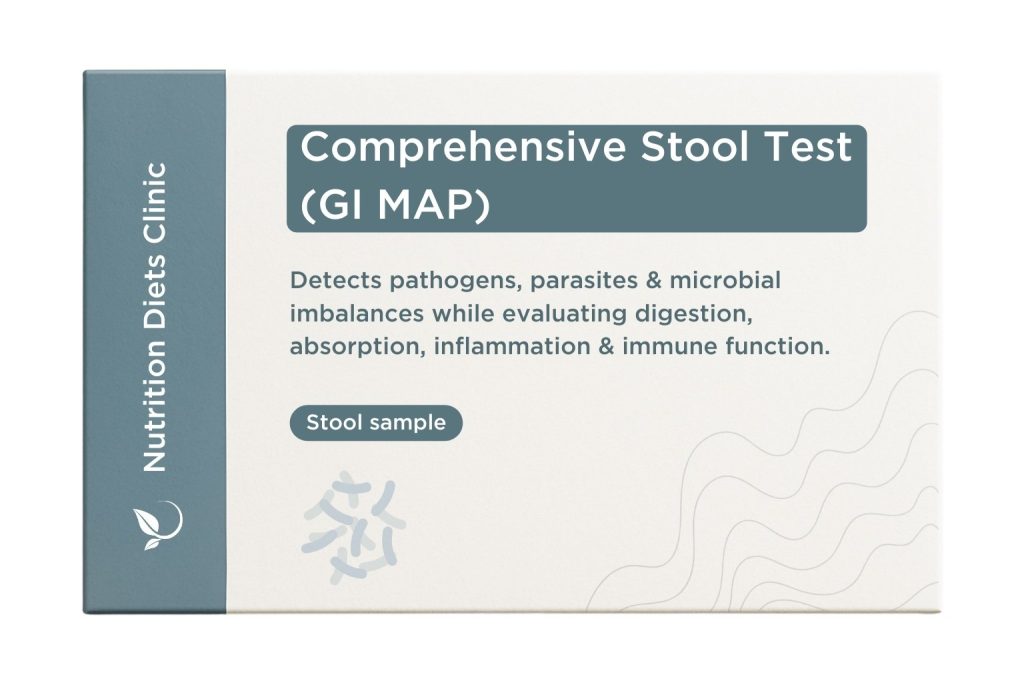


Gut microbiome test · At-home stool sample · UK clinic
Comprehensive Stool Test (GI-MAP)
The genuine GI-MAP, made by Diagnostic Solutions Laboratory: an at-home stool test, ordered through a UK clinic, that maps your gut bacteria and screens for infections, parasites and H. pylori from one sample. 87 markers, analysed by quantitative PCR. The test to start with for bloating, reflux, IBS or changeable bowels that standard tests have not explained.
- Price includes the kit, lab analysis and your full lab report
- Free UK delivery and prepaid return by DHL
- Results in 21 working days
Not sure if this is the right test for you? Book a free 15-minute Discovery Call with a registered practitioner.
What you receive
Your at-home GI-MAP kit from Diagnostic Solutions Laboratory, laboratory analysis of your stool sample by quantitative PCR, plus lab report measuring 87 markers across nine groups, each one quantified and flagged against the lab’s reference ranges. View a sample lab report.
Delivery and turnaround
Free UK delivery and prepaid return, both by DHL courier. Kits are dispatched within 1 to 2 working days and delivered the next working day. Results ready approximately 21 working days from when the lab receives your sample. International delivery is available, with costs calculated at checkout.
What does the GI-MAP test for?
It tests for the bacteria, parasites, fungi and viruses living in your gut, including H. pylori and its virulence genes, and checks how well you digest, how your gut immune system is coping and whether there is inflammation. Quantitative PCR gives a measured count for every organism, which a consumer microbiome kit cannot.
Digestion & inflammation
Shows you how well you are digesting and absorbing your food, and whether your gut is inflamed.
H. pylori
Tells you whether you carry the stomach bacterium linked to reflux, gastritis and ulcers, and, if so, how aggressive it is.
Pathogens, parasites & fungi
Checks whether an infection, a parasite or a yeast overgrowth is behind your symptoms.
Your gut microbiome
Shows you whether your gut bacteria are in balance, or whether an imbalance (dysbiosis) could explain your symptoms.
See all 87 markers, in nine groupsTap or click a group to see every marker in it
Bacterial pathogens
Bacteria that cause acute gut infection.
- C. difficile toxin A
- C. difficile toxin B
- Campylobacter
- E. coli EPEC/EHEC
- E. coli O157
- Enteroinvasive E. coli / Shigella
- Enterotoxigenic E. coli LT/ST
- Salmonella
- Shiga-like toxin E. coli stx1
- Shiga-like toxin E. coli stx2
- Vibrio cholerae
- Yersinia enterocolitica
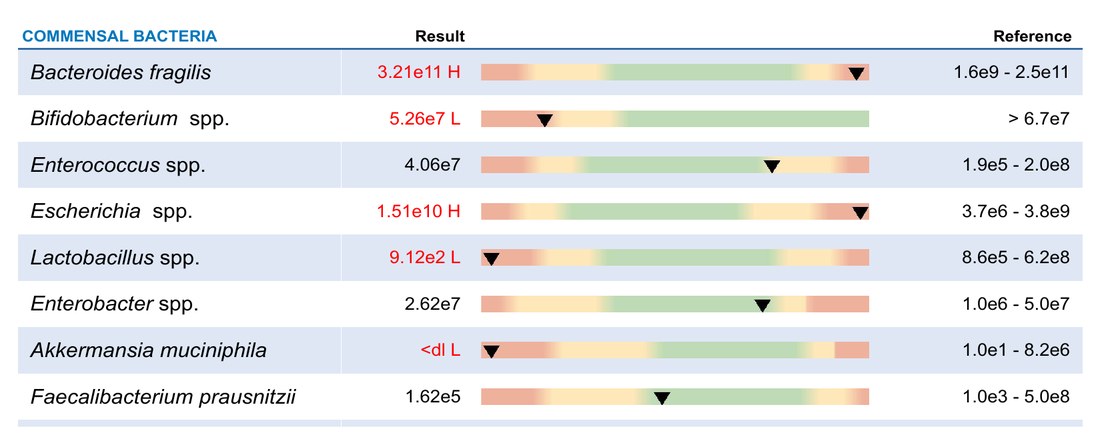
Commensal / keystone bacteria
The beneficial bacteria a healthy gut depends on.
- Akkermansia muciniphila
- Bacteroides fragilis
- Bacteroidetes
- Bifidobacterium spp.
- Enterobacter spp.
- Enterococcus spp.
- Escherichia spp.
- Faecalibacterium prausnitzii
- Firmicutes
- Firmicutes : Bacteroidetes ratio
- Lactobacillus spp.
- Roseburia spp.
Digestion, immune & inflammation markers
Markers of digestive function, gut immune defence, gluten reactivity, inflammation and hidden blood in the stool.
- β-Glucuronidase
- Anti-gliadin IgA
- Calprotectin
- Elastase-1
- Eosinophil activation protein (EDN)
- Occult blood (FIT)
- Secretory IgA
- Steatocrit
Dysbiotic & overgrowth bacteria
Normally harmless bacteria that cause symptoms when they overgrow.
- Bacillus spp.
- Desulfovibrio spp.
- Enterococcus faecalis
- Enterococcus faecium
- Methanobacteriaceae
- Morganella spp.
- Pseudomonas aeruginosa
- Pseudomonas spp.
- Staphylococcus aureus
- Staphylococcus spp.
- Streptococcus spp.
Fungi, yeast & viruses
Candida and other yeasts and fungi, plus two viruses that affect immune function.
- Candida albicans
- Candida spp.
- Cytomegalovirus
- Epstein-Barr virus
- Geotrichum spp.
- Microsporidium spp.
- Rhodotorula spp.
H. pylori & virulence factors
The stomach bacterium associated with reflux, gastritis and ulcers, and its virulence genes.
- babA
- cagA
- dupA
- Helicobacter pylori
- iceA
- oipA
- vacA
- virB
- virD
Inflammatory & autoimmune-related bacteria
Bacteria associated with gut inflammation and autoimmune conditions.
- Citrobacter freundii
- Citrobacter spp.
- Enterobacter spp.
- Escherichia spp.
- Fusobacterium spp.
- Klebsiella pneumoniae
- Klebsiella spp.
- M. avium subsp. paratuberculosis
- Prevotella spp.
- Proteus mirabilis
- Proteus spp.
Parasites: protozoa & worms
Single-celled parasites such as Blastocystis and Dientamoeba, and intestinal worms including roundworm, hookworm, whipworm and tapeworm.
- Ancylostoma duodenale
- Ascaris lumbricoides
- Blastocystis hominis
- Chilomastix mesnili
- Cyclospora spp.
- Dientamoeba fragilis
- Endolimax nana
- Entamoeba coli
- Necator americanus
- Pentatrichomonas hominis
- Taenia spp.
- Trichuris trichiura
Parasitic & viral pathogens
Infectious parasites and viruses behind gastrointestinal illness.
- Adenovirus 40/41
- Cryptosporidium
- Entamoeba histolytica
- Giardia
- Norovirus GI/II
Who is the GI-MAP test for?
For digestive symptoms that keep coming back, such as bloating, reflux, constipation, diarrhoea or IBS, and for fatigue or skin problems that may start in the gut.
Acne, eczema, rashes
Often linked to: gut inflammation and dysbiosis.
This test measures: inflammatory bacteria and calprotectin.
Anxiety & low mood
Often linked to: dysbiosis and inflammation, through the gut-brain axis.
This test measures: beneficial and overgrown bacteria, and calprotectin.
Bloating & gas
Often linked to: bacterial overgrowth, low digestive enzyme output or H. pylori.
This test measures: overgrowth and methane-producing bacteria, elastase for enzyme output, and H. pylori.
Brain fog
Often linked to: dysbiosis and inflammation, through the gut-brain axis.
This test measures: bacterial balance and calprotectin.
Chronic fatigue
Often linked to: poor absorption or a chronic gut infection.
This test measures: elastase and steatocrit for digestion, plus pathogens and parasites.
Constipation
Often linked to: an imbalanced microbiome, low keystone bacteria and methane-producing overgrowth.
This test measures: keystone species such as Akkermansia, and Methanobacteriaceae.
Cramps & stomach pain
Often linked to: a gut infection, inflammation or H. pylori.
This test measures: bacterial, parasitic and viral pathogens, calprotectin for inflammation, and H. pylori.
Diarrhoea
Often linked to: an infection, a parasite or gut inflammation.
This test measures: salmonella, C. difficile, Giardia, Cryptosporidium, Blastocystis and more, plus calprotectin.
Heartburn
Often linked to: H. pylori, a common driver of reflux and gastritis.
This test measures: h. pylori and eight virulence factors, which show how aggressive the strain is.
IBS / IBD
Often linked to: overgrowth, a lingering infection or a post-infectious gut; IBD flares show as raised calprotectin.
This test measures: pathogens, parasites, overgrowth bacteria, and calprotectin.
Joint pain
Often linked to: bacteria associated with inflammation and autoimmunity.
This test measures: Klebsiella, Proteus, Citrobacter and related species.
Poor sleep
Often linked to: gut imbalance and inflammation, both of which can disrupt sleep.
This test measures: the microbiome map and inflammation markers.
Thyroid & autoimmune
Often linked to: bacteria associated with autoimmune conditions.
This test measures: the inflammatory and autoimmune-related bacteria group.
Weight struggles
Often linked to: low keystone bacteria such as Akkermansia, and overgrowth.
This test measures: keystone species, the Firmicutes to Bacteroidetes ratio, and overgrowth bacteria.
How does the at-home GI-MAP stool test work?
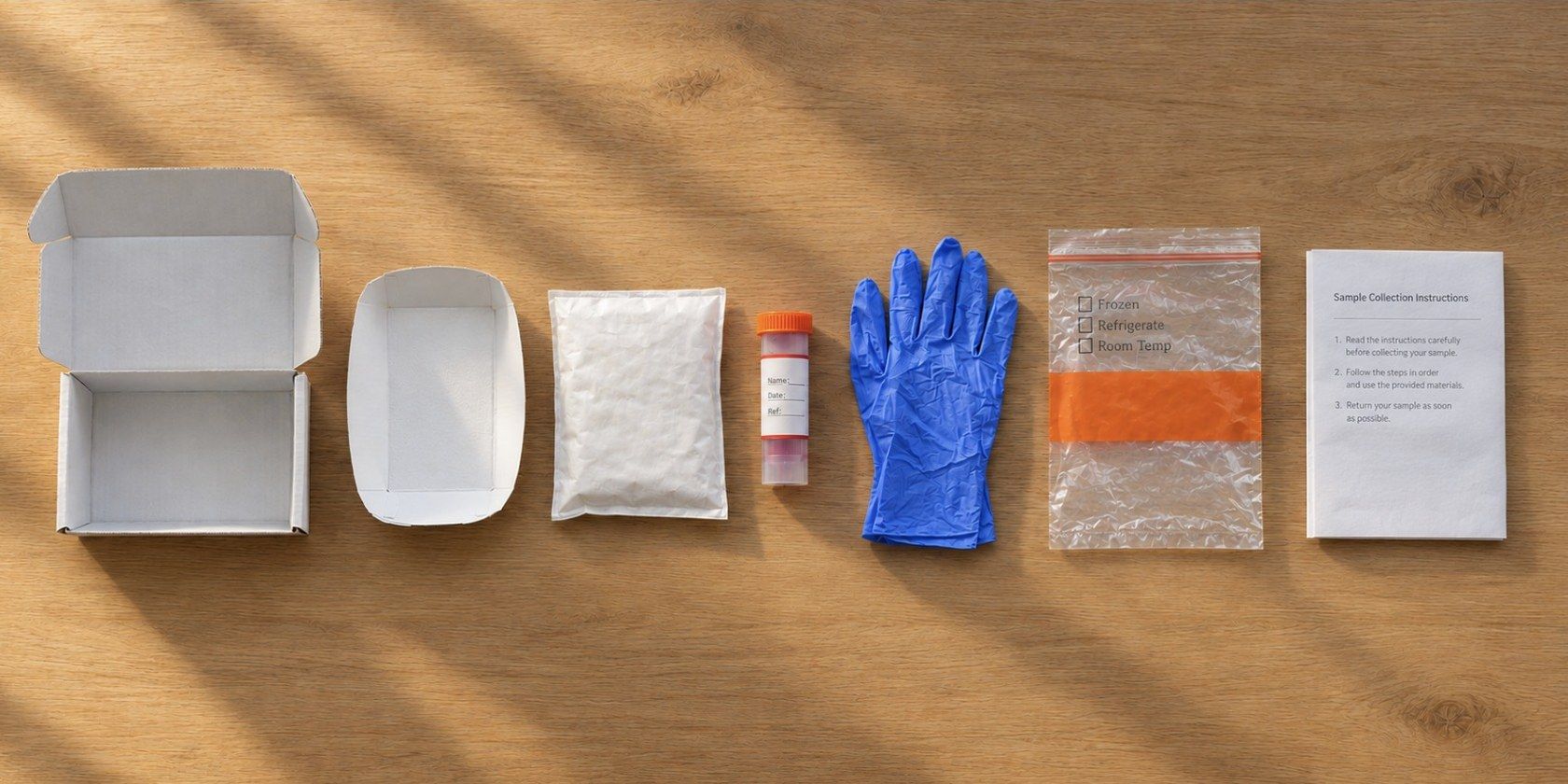
You collect a single sample at home with everything provided in the kit, and DHL collects it from your door.
Order online
Secure checkout. No clinic visit or GP referral required.
Your kit arrives by courier
Dispatched within 1 to 2 working days. Delivered next day by DHL.
Collect sample at home
One stool sample, following the instructions in the kit.
Return by prepaid courier
Book a free DHL collection online. Results ready in 21 working days.

How do I interpret my results?
Making sense of a lab report is the most important part of testing. Once your results are ready, your lab report is uploaded to your secure Client Folder. From there, you choose your level of support from our UK-registered nutritional therapist (optional, priced separately): a Lab Findings Review or a Comprehensive Consultation.
BSc, CNHC, NLP Dip

Which consultation is right for me?
Understand your results with a Lab Findings Review, or go a step further and act on them with a Comprehensive Consultation.

Lab Findings Review
£99- Clinical analysis of your lab results
- What the findings mean for your symptoms and health
- Time for your questions
Comprehensive Consultation
£180- Everything in the Lab Findings Review
- In-depth review of your health history, diet and lifestyle (Health Questionnaire and Food & Symptoms Diary)
- A fully personalised nutrition & lifestyle action plan
What do our customers say?
“This is a fantastic GI MAP stool test. … I love that it included H.pylori, which the previous test didn't test for. Also tells you how your keystone species are looking, if you have enough digestive enzymes and which key infections you have.”
PennyVerified customerFindings later confirmed by a gastroenterologist
I was unable to digest anything when I first met Carmen but using this GI MAP test she identified what was wrong (her findings were confirmed later by intensive testing by a gastroenterologist). I can't recommend working with her more.
AishaVerified customerReview of the Comprehensive Stool Test (GI MAP) Plus ZonulinAn easy first step that showed where to start
This test was the first port of call for me working with Carmen. Most things start with the gut so this seemed like a good place to start. The test is very easy and straightforward and results are sent out in a matter of weeks.
AdamVerified customerReview of the Comprehensive Stool Test (GI MAP) Plus ZonulinRead the review of this testWrite a review
Add a review
Frequently Asked Questions
Can I do the GI-MAP test at home in the UK?
Yes. The GI-MAP is an at-home stool test. You order online, the kit arrives by courier, you collect one small sample at home and the prepaid return takes it to the lab. There is no GP referral and no clinic visit. We send kits to any UK address, and international delivery is priced at checkout.
Can the GI-MAP be used for children?
Yes. The GI-MAP is suitable for children from 2 years of age, where a more detailed assessment of gut health and the gut microbiome is appropriate. If you are unsure whether it is the right test for your child, book a free Discovery Call and a registered practitioner will help you decide.
What is the difference between the GI-MAP and the GI-MAP + Zonulin?
The GI-MAP covers the gut itself: pathogens, parasites, H. pylori, your microbiome, digestion and inflammation. The GI-MAP + Zonulin adds zonulin, the marker of intestinal permeability (leaky gut). Choose the GI-MAP with zonulin when symptoms reach beyond the gut, such as skin flare-ups, fatigue or inflammatory and autoimmune conditions; choose the GI-MAP when the symptoms are digestive.
Is the GI-MAP test worth it if I don’t have digestive symptoms?
It can be. Gut imbalances and infections often show up outside the gut, as fatigue, brain fog, skin problems or low mood. If your symptoms are ongoing and standard tests have come back clear or inconclusive, the GI-MAP looks where they do not. Where leaky gut is the question, the GI-MAP + Zonulin is the better choice.
How accurate is the GI-MAP test?
The GI-MAP is made by one laboratory, Diagnostic Solutions Laboratory, and analysed by quantitative PCR (qPCR), which detects the DNA of each organism and measures how much is present. That measurement is what lets a practitioner tell a trace from an active infection, and it is the difference between a clinical test and a standard consumer microbiome kit, which uses sequencing to report relative abundance. If a test is not from Diagnostic Solutions Laboratory, it is not the GI-MAP. Like any lab test, the report is a snapshot, which is why a practitioner reads it against your symptoms and history.
Can I get the GI-MAP test on the NHS?
No. The NHS does not offer the GI-MAP or comprehensive gut microbiome testing; NHS stool tests look for specific infections or blood. The GI-MAP is a private test ordered through a clinic. The price covers the kit, the lab analysis and your lab report; having the report interpreted is a separate, optional consultation.
When should I collect my sample?
On a Sunday or Monday. The sample must be shipped within 24 hours of collection and DHL does not collect at weekends, so collect on Sunday or Monday and book your free DHL collection for the next day. Keep the packed envelope in the fridge until the driver arrives. Full instructions are in the kit.
What should I be aware of before collecting my sample?
Your kit includes full collection instructions. To make your sample as representative as possible, please note the following before you collect it.
- Allow at least 2 weeks after finishing a course of antibiotics, antifungals, antiparasitic treatments or other antimicrobial protocols.
- Stop probiotic supplements 2 weeks before collection.
- Stop non-essential prebiotics and other gut-support supplements 7 days before collection.
- Stop digestive enzymes, betaine HCl, antacids, activated charcoal and bentonite clay 3 days before collection.
- If you have recently had a colonoscopy or barium enema, wait at least 4 weeks.
- Do not collect during menstruation or while you have active bleeding from haemorrhoids.
- If constipation makes collection difficult, contact us for advice before using laxatives, enemas or suppositories.
Never stop prescribed medication without first consulting your doctor or prescriber. If you take a proton pump inhibitor (PPI) or another prescribed medication that may affect the gut environment, or you are unsure whether anything you take could affect your results, contact us before collecting your sample and we will advise you.
Can someone help me interpret my GI-MAP results, even if I tested elsewhere?
Yes. Book a Lab Findings Review with us and a registered nutritional therapist will take you through every marker against your symptoms and history, whether you tested with us or elsewhere; bring your report to the session. If you then want a personalised plan, that is the Comprehensive Consultation.



1 review for Comprehensive Stool Test (GI MAP)
Penny verified customer
This is a fantastic GI MAP stool test. Compared to the another test I tried, which was overly complicated, this test is five pages and highlights the key features of your gut health. I love that it included H.pylori, which the previous test didn’t test for. Also tells you how your keystone species are looking, if you have enough digestive enzymes and which key infections you have. My functional health practitioner went through each result, step by step and I feel safe with her knowledge to help me resolve these issues. Please go ahead with this test if you’re considering it. Very helpful to give you and your practitioner a road map to reclaim your health.