Immune & autoimmune nutritionist · Online across the UK
Immune System Support
Living with an autoimmune condition, flares with no clear cause, or always run down? Find out what may be driving them, from your gut and nutrients to triggers, stress and hormones, with an experienced, UK-registered nutritional therapist and get a functional medicine plan built around you.
5.0from 68 Google reviews
Which immune and autoimmune problems can we help with?
Choose what you're experiencing to see what may be behind it and how we can help.
Living with an autoimmune condition
A condition such as Hashimoto’s thyroiditis, rheumatoid arthritis, psoriasis or coeliac disease, diagnosed and managed by your GP or specialist, where you want to support your health alongside their care.
Often linked to
Your options
Your GP and specialist diagnose and manage your condition, and nothing here replaces their care. A functional medicine consultation works alongside them, looking at what may be adding to the load on your immune system, such as your gut, triggers, nutrient status, stress, hormones and sleep, to support how you feel day to day. Where the picture is unclear, testing may be recommended either as a first step, or later on.
Keep taking any medication your doctor has prescribed: never stop or change it without them. New or worsening symptoms during a flare need your GP or specialist.
Consultation
Comprehensive Consultation£180Want to discuss your symptoms or test options? Book a free 15-minute Discovery Call
Hashimoto’s or thyroid antibodies
Diagnosed with Hashimoto’s thyroiditis, or told you have raised thyroid antibodies, and still tired, foggy or struggling with your weight despite your GP’s care.
Often linked to
Your options
Your GP diagnoses and monitors your thyroid and any medication. A consultation works alongside them, looking at your gut, nutrients the thyroid relies on such as selenium and vitamin D, food reactions, stress and sleep, to support how you feel day to day. Where the picture is unclear, testing may be recommended either as a first step, or later on.
Keep taking any thyroid medication as prescribed, and ask your GP before changing it. Our tests do not measure thyroid hormones or antibodies: your GP does that with a blood test.
Consultation
Comprehensive Consultation£180Want to discuss your symptoms or test options? Book a free 15-minute Discovery Call
Psoriasis and skin that flares
Psoriasis, eczema or hives that flare when you are stressed, run down or unwell, often alongside gut symptoms.
Your options
A consultation looks at your skin alongside your gut, diet, triggers, stress and sleep, to understand what may be setting off the flares and tailor your therapy. Where the picture is unclear, testing may be recommended either as a first step, or later on. Our skin conditions page covers psoriasis in more depth.
A rash that does not fade when you press it, with a fever or feeling very unwell, is an emergency: call 999.
Consultation
Comprehensive Consultation£180Want to discuss your symptoms or test options? Book a free 15-minute Discovery Call
Joint pain and rheumatoid arthritis
Rheumatoid or psoriatic arthritis managed by your rheumatologist, or joints that ache, swell and stiffen without a clear injury.
Your options
Your GP and rheumatologist diagnose and manage arthritis. A consultation works alongside them, looking at your diet, gut, weight, triggers, sleep and stress, to understand what may be keeping inflammation going and support how you feel day to day. Where the picture is unclear, testing may be recommended either as a first step, or later on.
Painful, swollen joints, especially with stiffness that lasts more than 30 minutes each morning, need your GP. Keep taking any medication your doctor has prescribed: never stop or change it without them.
Consultation
Comprehensive Consultation£180Want to discuss your symptoms or test options? Book a free 15-minute Discovery Call
Coeliac disease, Crohn’s or colitis
Coeliac disease, Crohn’s disease or ulcerative colitis, diagnosed and managed by your GP or gastroenterologist, where you want support with diet, nutrients and energy alongside their care.
Often linked to
Your options
Your GP and gastroenterologist manage your condition. A consultation works alongside them, looking at your diet, your nutrient status, which can run low when the gut is inflamed or damaged, and your energy, stress and sleep, to support how you feel day to day. Where the picture is unclear, testing may be recommended either as a first step, or later on. Our gut health page covers the gut lining in more depth. Our fertility page covers coeliac disease and unexplained fertility problems.
Blood in your stool, losing weight without trying, or a flare with severe pain or diarrhoea needs your GP or IBD team. Coeliac disease is diagnosed with a blood test while you are still eating gluten, so do not cut gluten out before you are tested.
Consultation
Comprehensive Consultation£180Want to discuss your symptoms or test options? Book a free 15-minute Discovery Call
Aches, fatigue and flares with no clear cause
Aching joints, tiredness, rashes or gut symptoms that come and go in flares, without a clear diagnosis.
Your options
A consultation looks at the pattern of your flares alongside your gut, diet, triggers, nutrients, stress, sleep and hormones, to understand what may be keeping inflammation going and tailor your therapy. Where the picture is unclear, testing may be recommended either as a first step, or later on.
If your GP has not yet looked into symptoms like these, see them first: they can run the blood tests that check for inflammation and autoimmune conditions.
Consultation
Comprehensive Consultation£180Want to discuss your symptoms or test options? Book a free 15-minute Discovery Call
Flares with stress or hormonal change
Flares of skin, gut or joint symptoms, or getting ill more often, during stressful stretches, around your period or through perimenopause.
Your options
A consultation looks at your stress, sleep, cycle or stage of life alongside your diet and gut, to understand how they may be setting off the flares and tailor your therapy. Where the picture is unclear, testing may be recommended either as a first step, or later on. Our hormonal imbalances page covers stress, sleep and cortisol and perimenopause.
Bleeding after the menopause, between periods or after sex needs your GP first.
Consultation
Comprehensive Consultation£180Want to discuss your symptoms or test options? Book a free 15-minute Discovery Call
Run down and always picking things up
One infection after another, slow recovery, or cold sores and other infections that keep coming back, often alongside gut or hormonal symptoms.
Often linked to
Your options
A consultation looks at the pattern of your infections alongside your gut, nutrients, stress, sleep and hormones, to understand what may be wearing your defences down and tailor your therapy. NHS advice is that everyone should consider a daily 10 microgram vitamin D supplement in autumn and winter. Testing shows whether that is enough for you.
If you keep getting serious infections, or infections that need antibiotics again and again, see your GP, who can look into why. A mouth ulcer that lasts longer than three weeks also needs your GP.
Consultation
Comprehensive Consultation£180Want to discuss your symptoms or test options? Book a free 15-minute Discovery Call
What drives autoimmune and immune problems?
Functional medicine sees the immune system as connected to the rest of the body, and starts with the gut, one of its largest parts. A widely used model describes autoimmune conditions as needing three things together: a genetic tendency, a trigger, and a gut lining that has become more permeable. Genes cannot be changed, but your gut, triggers, nutrients, stress and hormones often can, and they shape how often you get ill too. An immune health nutritionist looks for the pattern behind yours and shapes a plan personalised to your needs.
A leaky gut and imbalanced bacteria
The gut lining and its bacteria, home to most of the cells in your body that make antibodies.Your gut is one of the largest parts of your immune system: most of the cells that make antibodies sit in its lining, where they meet everything you eat. A healthy gut lining, a diverse mix of bacteria and enough secretory IgA, the antibody that guards the gut lining, help it tell friend from foe. When the bacteria are out of balance or the lining becomes more permeable (often called leaky gut), more gets through and the immune system can stay on alert. That is why functional medicine starts with the gut in autoimmune conditions, skin flares and frequent illness.Read more
Sound familiar?
- Bloating, loose stools or an upset gut alongside an autoimmune condition
- Flares or frequent illness since a course of antibiotics or a stomach bug
- Food reactions that have built up over time
What can lead to it
- Antibiotics and some other medicines
- Gut infections
- A low-fibre diet with little variety
- Long-term stress
Our approach
We support digestion and the gut lining first, then rebuild the variety and fibre in your diet step by step. Our gut health page covers a leaky gut lining in more depth.
How we investigate
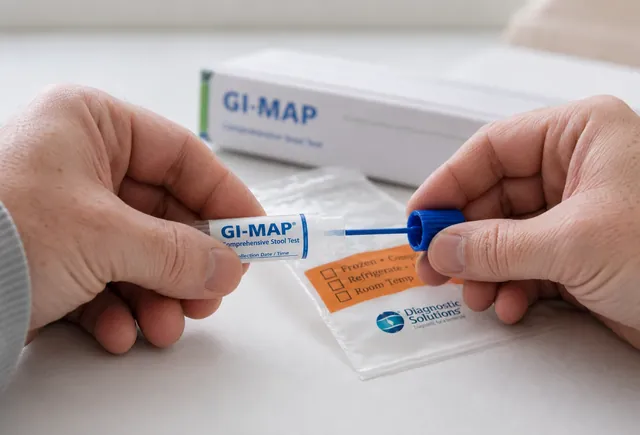
The GI-MAP + Zonulin maps your gut bacteria, including the species associated with autoimmunity, and measures secretory IgA, calprotectin (a marker of gut inflammation) and zonulin, a marker of gut permeability, from one stool sample. It looks at the gut only: it does not measure blood markers or the antibodies used to diagnose autoimmune conditions.
Want to discuss your symptoms or test options? Book a free 15-minute Discovery Call
Triggers: food, infections and toxins
Things the immune system reacts to that can keep it switched on, from foods such as gluten to infections and heavy metals.Functional medicine looks for what may be setting the immune system off. Common triggers are foods some people react to, gluten above all, which is the trigger in coeliac disease; infections in the gut or elsewhere; and toxins such as heavy metals or chemicals at home and work. Not everyone has an obvious trigger, but finding and reducing the ones you do have is a large part of the work.Read more
Sound familiar?
- Symptoms that are worse after certain foods
- A condition that began or worsened after an infection
- Regular exposure to chemicals at work or home
What can lead to it
- Foods you react to, such as gluten or dairy
- Gut infections, parasites or yeast overgrowth
- Heavy metals such as lead and mercury
- A gut lining that lets more through
Our approach
We work out which triggers are likely to matter for you, then reduce them step by step, often with a planned elimination and reintroduction of foods rather than cutting everything out at once. Our food allergies and intolerances page covers food sensitivities in more depth.
How we investigate
The GI-MAP + Zonulin screens for gut infections, parasites and yeast. The NutrEval Test measures lead, mercury, arsenic and cadmium. Coeliac disease is diagnosed by your GP with a blood test while you are still eating gluten, so do not cut gluten out before you are tested.
Want to discuss your symptoms or test options? Book a free 15-minute Discovery Call
Low vitamin D and other nutrient gaps
Running short of the vitamin D, omega-3 fats, zinc, selenium and other nutrients the immune system depends on.Your immune system needs a steady supply of nutrients to keep its responses in balance. Vitamin D, omega-3 fats, zinc, selenium (which the thyroid relies on), iron and protein all play a part. Low vitamin D is common in autoimmune conditions and in the UK from October to March, and nutrients can run low when the gut is inflamed or a diet has been cut back.Read more
Sound familiar?
- A restricted diet, or foods cut out without a plan
- Mostly indoors, or always covered up when outside
- Taking supplements without knowing whether you need them
What can lead to it
- Little sunlight on your skin, or darker skin
- A diet low in oily fish, eggs, nuts, seeds, vegetables and protein
- Poor absorption from an inflamed or damaged gut
- Ongoing stress, which uses up nutrients faster
Our approach
We look at what you eat, how much sun you get and how well you absorb nutrients, then build a way of eating that fills the gaps, with targeted supplements only where your symptoms and results show you need them. Our metabolic issues page covers nutrient gaps and energy in more depth.
How we investigate
The Complete Vitamin D Test measures your vitamin D level from a finger-prick at home. It measures vitamin D only. The NutrEval Test reads zinc, selenium, glutathione, B-vitamin markers and your omega-3 balance from blood and urine; it does not measure vitamin D or iron.
Want to discuss your symptoms or test options? Book a free 15-minute Discovery Call
Stress, sleep and hormones
A stress system that stays switched on, short sleep, and hormonal change that shifts how the immune system behaves.Cortisol, the main stress hormone, helps to calm the immune system in the short term. When stress runs for months, or sleep is short, that balance is lost: autoimmune conditions can flare, and people tend to catch more infections and take longer to recover. Sex hormones shape the immune response too, which is one reason many autoimmune conditions are more common in women and can change around pregnancy or the menopause.Read more
Sound familiar?
- Flares during stressful stretches, around your period or through perimenopause
- Getting ill as soon as you stop, such as at the start of a holiday
- Short or broken sleep most nights
What can lead to it
- Long-term work or family stress
- Short or broken sleep
- Shift work
- Hormonal change, such as perimenopause
Our approach
We look at your stress load, sleep, routines and hormonal stage alongside your meals, and build changes that calm the stress system and protect your sleep. Our hormonal imbalances page covers stress, sleep and cortisol in more depth.
How we investigate
The DUTCH Plus maps your cortisol across one day, including the rise after you wake, and your sex hormones and how you break them down, from dried urine and saliva collected at home.
Want to discuss your symptoms or test options? Book a free 15-minute Discovery Call
Inflammation that does not settle
Low-level inflammation that lingers after the immune system should have stood down.Inflammation is part of how the immune system fights infection and heals injury, and it should settle once the job is done. When it lingers, often with aches, stiffness, skin flares and tiredness, the balance of fats in your diet, your antioxidant defences, your gut, your weight and your stress levels can all play a part.Read more
Sound familiar?
- Aching or stiff joints without a clear injury
- Tiredness that comes with a general sense of being inflamed
- A diet high in processed food and low in oily fish and vegetables
What can lead to it
- A diet low in omega-3 fats and high in processed food
- An imbalanced gut
- Carrying extra weight around the middle
- Ongoing stress and short sleep
Our approach
We build a way of eating that supports a calmer immune response, with more omega-3 fats, colourful vegetables and fibre, alongside gut support, movement, sleep and stress changes. Our guide to inflammation and autoimmune conditions covers this in more depth.
How we investigate
The NutrEval Test measures your omega-3 and omega-6 balance, arachidonic acid, lipid peroxides and glutathione, which show how your fats and antioxidant defences may be feeding inflammation.
Want to discuss your symptoms or test options? Book a free 15-minute Discovery Call

What is it like to work with a nutritional therapist?
You’ll work with one practitioner, one to one and online, from start to finish. Carmen Martinez-Vidal is a UK-registered nutritional therapist with over 15 years in functional medicine, and autoimmune conditions are one of her specialities. She looks at your symptoms alongside your gut, diet, triggers, hormones, stress, sleep and any GP results to work out what’s driving them, advises on and interprets any testing, and designs a personalised protocol to address the root causes, refining it with you at each step.

Should I see an immune health nutritionist or take a test first?
There's no one-size-fits-all approach to immune health. We shape your therapy around your symptoms, history, GP results and goals, whether you begin with a consultation or a test.

One-to-one consultation
Start here if you’ve already tried other routes or want a comprehensive review of your health. Carmen assesses your history, diet, lifestyle and symptoms in depth to identify possible underlying causes, design a targeted action plan and recommend whether testing is worthwhile.
60-minute Comprehensive Consultation · £180

Immune health testing
Start here if you’d like answers from a test first. We can help you choose if you’re not sure which test is right for you. Your results are then professionally interpreted and explained in a Lab Findings Review (£99) with Carmen, or applied to a personalised plan in a full Comprehensive Consultation (£180).
Tests from £75
See the testsNot sure where to begin?
Talk it through with Carmen on a free 15-minute video call to understand your best first step.
Which immune health tests can I take?
Two people with the same autoimmune condition can have quite different things driving it, and cutting out foods or taking supplements at random rarely finds them. Testing shows where to look, so support goes where it is needed. Explore the tests below to see what each one can tell you.
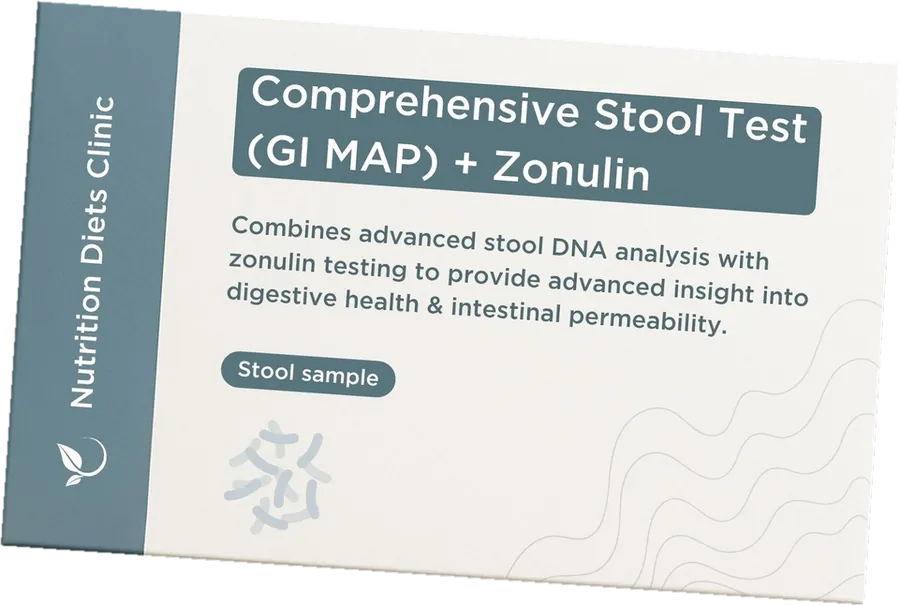
Comprehensive Stool Test (GI-MAP) + Zonulin
Find out what is living in your gut and how well your gut lining and its immune defences are holding up.
- 88 markers
- Results in 21 working days
- Free UK delivery
Explore more immune health tests
All at-home tests →Not sure which test is right for you? Book a free Discovery Call
What do our clients say?
Common questions about immune health
Can a nutritionist help with autoimmune disease?
Alongside your GP and specialist, yes; instead of them, no. A registered nutritional therapist does not diagnose or treat autoimmune conditions. What we can do is look at what may be adding to the load on your immune system, such as your gut, triggers, nutrient status, stress, sleep and hormones, and build changes that support how you feel day to day. Keep taking any medication your doctor has prescribed: never stop or change it without them.
Can functional medicine help with autoimmune disease?
It can support you alongside the medical care that manages your condition, but it does not diagnose or treat autoimmune conditions. Functional medicine looks for what may be driving an autoimmune condition. A widely used model describes three things coming together: a genetic tendency, a trigger such as a food, an infection or a toxin, and a more permeable gut lining. We work on the parts that can change: your gut, the triggers you are exposed to, your nutrient status, stress, sleep and hormones. Then we build a plan for diet, lifestyle and any targeted supplements, and suggest testing where it would change what we do.
How do I know if I have an autoimmune disease?
Only your GP or a specialist can tell you, usually starting with blood tests that check for inflammation and autoimmune conditions, so start there. Alongside that, a free Discovery Call is a chance to talk through your symptoms and whether a functional medicine approach could help, while you wait for answers or whatever your results show.
Is there an autoimmune diet?
There is no single diet that suits every autoimmune condition. Some people use an elimination approach such as the autoimmune protocol (AIP), which removes common trigger foods for a few weeks and then reintroduces them one at a time to see what you react to. It can be restrictive, so it works best planned with a practitioner, alongside a way of eating built around vegetables, oily fish and fibre that supports the gut. If you might have coeliac disease, get tested before you cut out gluten.
What is the best diet for Hashimoto’s?
There is no single Hashimoto’s diet, and your GP diagnoses Hashimoto’s and manages any thyroid medication. What we look at, alongside their care, is what may be adding to it: your gut, nutrients the thyroid relies on such as selenium, vitamin D, food reactions such as gluten, stress and sleep. Our tests do not measure thyroid hormones or antibodies; your GP does that.
How are gut health and autoimmunity linked?
Your gut is one of the largest parts of your immune system, and most of the cells that make antibodies sit in its lining, where they meet everything you eat. Your gut bacteria help train it, and secretory IgA, an antibody made in the gut lining, is one of its first defences. When the bacteria are out of balance or the lining becomes more permeable, more gets through and the immune system can stay on alert, which is why functional medicine starts with the gut in autoimmune conditions.
Why do I keep getting ill?
Catching infections more often than the people around you, taking a long time to recover, infections that keep coming back, such as cold sores or urinary infections, and feeling run down much of the time are common signs of an immune system under strain. These usually point to things that can be changed, such as low vitamin D, a gut out of balance, short sleep or stress. Serious or unusual infections, or infections that keep needing antibiotics, are a reason to see your GP first.
Can low vitamin D affect autoimmune conditions?
Low vitamin D is common in people with autoimmune conditions, and immune cells depend on it. It is also common in the UK between October and March. NHS advice is that everyone should consider a daily 10 microgram vitamin D supplement in autumn and winter. The Complete Vitamin D Test shows your actual level, and whether a supplement you already take is working, so the dose can be set for you.
Can your tests diagnose an autoimmune condition?
Not the tests we offer. None of them measures your immune system directly or diagnoses an autoimmune condition: your GP does that with blood tests, including thyroid hormones and antibodies. The GI-MAP + Zonulin looks at your gut only, including secretory IgA and zonulin, and not at your blood. The Complete Vitamin D Test measures vitamin D only. The NutrEval Test covers more than 125 nutrient, metabolic and toxic metal markers but does not include vitamin D, iron or immune cells. The DUTCH Plus maps stress and sex hormones, not immunity.
How much does an autoimmune nutritionist cost in the UK?
The free Discovery Call is 15 minutes, and a Comprehensive Consultation is £180. At Nutrition Diets Clinic the GI-MAP + Zonulin is £455, the Complete Vitamin D Test £75, the DUTCH Plus £365 and the NutrEval Test £695 (the blood draw is booked separately). Having the results explained is a separate, optional consultation. Everything is online: consultations are by video from anywhere in the UK, and the gut, vitamin D and DUTCH tests are home collection kits, with a blood draw for the NutrEval that we help you arrange near you or at home.
Does the NHS recognise functional medicine?
Functional medicine is a private service rather than part of NHS care, so it works alongside your GP, not instead of them. When you choose a private practitioner, the NHS advises checking they are registered with an organisation accredited by the Professional Standards Authority (PSA). Carmen is registered with the Complementary and Natural Healthcare Council (CNHC), whose register the PSA accredits. We will always ask you to see your GP about symptoms that need medical assessment.
When should I see my GP first?
Call 999 if someone with an infection is breathing very fast, is confused or has slurred speech, has blue, pale or blotchy skin, or has a rash that does not fade when you press it. See your GP for symptoms that may be autoimmune and have not yet been looked into, if you keep getting serious infections or infections that need antibiotics again and again, and for painful swollen joints, blood in your stool, losing weight without trying, or a mouth ulcer lasting longer than three weeks. These need medical assessment, and we will always ask you to have it.
Still have questions? Ask Carmen on a free 15-minute video call.
Book a free Discovery Call