Food intolerance nutritionist · Online across the UK
Food Allergies & Intolerances
Bloating, headaches or skin flares after eating, with no clear culprit? Find out what you are reacting to, and what to do about it, with an experienced, UK-registered nutritional therapist.
5.0from 68 Google reviews
Which food reactions can we help with?
Choose what you're experiencing to see what may be behind it and how we can help.
Bloating after meals
A belly that swells and tightens after you eat, sometimes with wind or discomfort, and no single meal you can blame.
Your options
A consultation looks at what you eat, when the bloating comes and how long it lasts, your digestion and any test results, to understand what may be behind it and tailor your therapy. If your reactions seem to follow particular foods, testing may be recommended either as a first step, or later on. Our gut health page covers bloating in more depth.
Bloating that does not go away, with weight loss you cannot explain or a change in your bowels that lasts more than three weeks: see your GP.
Consultation
Comprehensive Consultation£180Want to discuss your symptoms or test options? Book a free 15-minute Discovery Call
Reactions to foods that used to be fine
Foods you have eaten for years now leave you bloated, itchy, foggy or uncomfortable, and the list of foods you avoid keeps growing.
Often linked to
Your options
A consultation looks at which foods, which reactions and their timing, alongside your gut and any test results, to understand why your tolerance has changed and tailor your therapy without an ever-shrinking diet. If your reactions seem to follow particular foods, testing may be recommended either as a first step, or later on.
Consultation
Comprehensive Consultation£180Want to discuss your symptoms or test options? Book a free 15-minute Discovery Call
Headaches & migraines
Headaches or migraines that seem to come after certain meals or drinks, sometimes hours later, with no clear pattern you can spot.
Often linked to
Your options
A consultation looks at your headaches alongside what you eat and drink, your sleep, stress, cycle and any test results, to understand what may be setting them off and tailor your therapy. If your reactions seem to follow particular foods, testing may be recommended either as a first step, or later on.
A sudden, severe headache, or one with a stiff neck, fever, confusion or weakness: call 999. Headaches that are new, getting worse or wake you up: see your GP.
Consultation
Comprehensive Consultation£180Want to discuss your symptoms or test options? Book a free 15-minute Discovery Call
Rashes, eczema or acne
Skin that flares, itches or breaks out hours or a day or two after eating, which makes the food behind it hard to pin down.
Often linked to
Your options
A consultation looks at when your skin flares, what you eat, your gut and any test results, to understand what may be setting it off and tailor your therapy. If your reactions seem to follow particular foods, testing may be recommended either as a first step, or later on. Our skin conditions page covers how food reactions show in the skin.
Hives with swelling of the lips, tongue or throat, or difficulty breathing: call 999.
Consultation
Comprehensive Consultation£180Want to discuss your symptoms or test options? Book a free 15-minute Discovery Call
Brain fog or tiredness after eating
Heavy, slow and unable to concentrate after a meal, as if a fog has come down, often after bread, pasta or dairy.
Often linked to
Your options
A consultation looks at your energy and focus through the day alongside your meals, sleep, stress and any test results, to understand what may be behind the fog and tailor your therapy. If your reactions seem to follow particular foods, testing may be recommended either as a first step, or later on.
If you have not had routine blood tests with your GP, ask for them: they rule out common medical causes of tiredness such as anaemia and thyroid problems.
Want to discuss your symptoms or test options? Book a free 15-minute Discovery Call
Flushing or a blocked nose after wine or cheese
A hot, flushed face, a runny or blocked nose, a headache or a racing heart soon after wine, aged cheese, cured meat or leftovers, though allergy tests have come back clear.
Often linked to
Your options
A consultation looks at what you eat and drink, when the reactions come, your gut and any test results, to understand whether histamine is involved and tailor your therapy. Where histamine looks involved, testing may be recommended either as a first step, or later on.
A racing heart with chest pain, or feeling faint or breathless: call 999.
Consultation
Comprehensive Consultation£180Want to discuss your symptoms or test options? Book a free 15-minute Discovery Call
Stomach cramps, diarrhoea or constipation
Cramping, urgent or loose stools, or constipation that seems to follow what you eat, sometimes diagnosed as IBS without anyone finding out why.
Your options
A consultation looks at your bowel habits alongside what you eat, your stress, history and any test results, to understand what may be driving them and tailor your therapy. If the pattern points to overgrowth or to particular foods, testing may be recommended either as a first step, or later on.
Blood in your stools, weight loss you cannot explain, or a change in your bowels that lasts more than three weeks: see your GP first.
Consultation
Comprehensive Consultation£180Want to discuss your symptoms or test options? Book a free 15-minute Discovery Call
Trouble with milk and dairy
Bloating, wind, loose stools, congestion or skin flares after milk, cheese or yoghurt, and you are not sure whether it is lactose or something else.
Often linked to
Your options
A consultation looks at which dairy foods affect you, how much and how quickly, alongside your digestion and any test results, to work out whether it is lactose, the milk proteins, or both, and tailor your therapy. We do not test for lactose intolerance; the food tests measure your immune response to the milk proteins. If your reactions seem to follow particular foods, testing may be recommended either as a first step, or later on.
Want to discuss your symptoms or test options? Book a free 15-minute Discovery Call
Trouble with gluten and wheat
Bloating, tiredness, brain fog or loose stools after bread, pasta or cereals, and wondering whether gluten is the problem.
Often linked to
Your options
A consultation looks at your symptoms, diet, gut and any test results, to understand how wheat and gluten may be involved and tailor your therapy. If your reactions seem to follow particular foods, testing may be recommended either as a first step, or later on.
Ask your GP to test you for coeliac disease before you cut out gluten: the blood test only works while you are still eating it.
Want to discuss your symptoms or test options? Book a free 15-minute Discovery Call
What is usually behind a food intolerance?
Reacting to food is rarely about the food alone. How well you digest it, how your gut lining and bacteria are doing and how quickly you clear histamine all play a part, which is why cutting out more foods seldom solves it. A food intolerance nutritionist helps identify what is behind yours and shapes a plan personalised to your needs.
Food sensitivities
Delayed reactions to everyday foods, often the ones you eat most.A food sensitivity is a delayed reaction to a food that does not involve the immediate response of an allergy. Symptoms can appear hours or even days after eating, which is why the food behind them is so hard to pin down by yourself.Read more
Sound familiar?
- Feeling worse after gluten or dairy, such as bread, pasta or cheese
- Feeling better on holiday or when you eat differently
- A list of foods you avoid that keeps growing
What can lead to it
- An irritated or leaky gut lining
- Eating the same few foods most days
- Stress and a run of gut upsets or antibiotics
Our approach
We narrow down the foods most likely to be involved, guide you through removing and then reintroducing them so your diet stays varied and nutritionally complete, and support your gut so that fewer foods cause a reaction over time. Our immune system support page covers food, infections and toxins as immune triggers.
How we investigate
The Food Sensitivity & Intolerance Test (200+) measures your IgG immune response to more than 200 foods and ingredients from a finger-prick blood sample, with vegetarian and vegan versions. It gives a shortlist of foods to investigate, not a diagnosis or a list of foods to avoid for life, so it is read against your symptoms and confirmed by removing and reintroducing them.
Want to discuss your symptoms or test options? Book a free 15-minute Discovery Call
Histamine intolerance
When the body clears histamine from food more slowly than it takes it in.Histamine is made by the body and found in many foods, especially aged, fermented and leftover ones. When the enzymes that break it down cannot keep up, it builds up and can look very like an allergy, even though allergy tests come back clear.Read more
Sound familiar?
- Flushing, a headache or a blocked nose after wine, aged cheese or cured meat
- Hives or itching with no clear cause
- Symptoms that are worse around your period
What can lead to it
- An irritated gut lining, where the DAO enzyme that clears histamine is made
- An imbalance in the gut bacteria, some of which produce histamine
- Genes that slow how you clear histamine
- A diet high in aged, fermented or leftover food
Our approach
We work out how much of your histamine load comes from food and how much from your gut, then lower it step by step with a time-limited low-histamine trial, while supporting how your body clears it.
How we investigate
The Histamine Intolerance Test is a cheek swab that reads the genes behind the two enzymes your body uses to clear histamine (DAO and HNMT). It shows your predisposition, not your histamine level today. Our skin conditions page covers how histamine shows in the skin.
Want to discuss your symptoms or test options? Book a free 15-minute Discovery Call
Leaky gut lining
A gut barrier that lets more through than it should, so the immune system reacts to more foods.The gut lining decides what passes from your food into your body. When it becomes more permeable, often called leaky gut, the immune system meets more food fragments than usual and can start reacting to foods that used to be fine.Read more
Sound familiar?
- Reacting to more and more foods over time
- A food test that flags a long list of foods
- Gut symptoms that started after an infection, antibiotics or a stressful time
What can lead to it
- Gut infections or food poisoning
- An imbalance in the gut bacteria
- Long-term stress
- Alcohol and some medicines, such as anti-inflammatory painkillers
Our approach
Rather than cutting out ever more foods, we support the gut lining to repair, so that you can tolerate a wider diet again.
How we investigate
A long list of reactive foods on a food test often points to the gut barrier rather than to the foods themselves. The GI-MAP + Zonulin maps your gut microbiome and measures zonulin, a marker of gut permeability. Our gut health page covers leaky gut in more depth.
Want to discuss your symptoms or test options? Book a free 15-minute Discovery Call
Bacteria in the wrong place (SIBO)
Gut bacteria that have moved up into the small intestine and ferment your food early.Most gut bacteria live in the large intestine. When too many grow higher up, in the small intestine, they ferment food before it is fully digested, so many different foods can seem to cause bloating, wind and discomfort.Read more
Sound familiar?
- Bloating that builds within an hour or two of eating
- Reacting to fibre, beans, onions or garlic
- A belly that is flat in the morning and swollen by evening
What can lead to it
- A past gut infection or food poisoning
- Slow movement through the gut
- Long-term use of acid-lowering medicines
Our approach
We look at your symptoms, meals and history together, and where overgrowth looks likely, build a plan to settle it and then rebuild a varied diet.
How we investigate
The SIBO Breath Test (Lactulose) measures the hydrogen and methane that bacteria in your small intestine produce, from breath samples you collect at home over three hours after a lactulose drink.
Want to discuss your symptoms or test options? Book a free 15-minute Discovery Call
Low digestive capacity, including lactose
Not enough of the enzymes or stomach acid you need to break certain foods down.Some food reactions are not immune reactions at all. Lactose intolerance, for example, happens when the gut makes too little lactase, the enzyme that digests the sugar in milk. Low stomach acid or enzymes can leave other foods only partly digested too.Read more
Sound familiar?
- Bloating, wind or loose stools after milk or ice cream
- Feeling heavy or full long after a meal
- Seeing undigested food in your stools
What can lead to it
- Lactase levels falling with age, which is common in adults
- A gut infection or inflamed gut lining
- Stress and eating in a rush
Our approach
We work out which foods you digest poorly and why, then adjust what and how you eat, with targeted digestive support where your symptoms show you need it.
How we investigate
We do not offer a lactose intolerance test, and our food tests do not measure it, because it is not an immune reaction. Lactose intolerance is usually recognised from your symptoms and from what happens when you cut out and reintroduce dairy, which we can guide. The Food Sensitivity & Intolerance Test (200+) does measure your immune response to the milk proteins (casein and whey).
Want to discuss your symptoms or test options? Book a free 15-minute Discovery Call

What is it like to work with a nutritional therapist?
You’ll work with one practitioner, one to one and online, from start to finish. Carmen Martinez-Vidal is a UK-registered nutritional therapist with over 15 years in functional medicine. She looks at your food reactions alongside your digestion, gut and lifestyle to work out what’s driving them, advises on and interprets any testing, and designs a personalised protocol to address the root causes, refining it with you at each step.

Should I see a food intolerance nutritionist or take a test first?
There's no one-size-fits-all approach to food reactions. We shape your therapy around your symptoms, history and goals, whether you begin with a consultation or a test.

One-to-one consultation
Start here if you’ve already tried other routes or want a comprehensive review of your health. Carmen assesses your history, diet, lifestyle and symptoms in depth to identify possible underlying causes, design a targeted action plan and recommend whether testing is worthwhile.
60-minute Comprehensive Consultation · £180

At-home food intolerance testing
Start here if you’d like answers from a test first. We can help you choose if you’re not sure which test is right for you. Your results are then professionally interpreted and explained in a Lab Findings Review (£99) with Carmen, or applied to a personalised plan in a full Comprehensive Consultation (£180).
Food intolerance tests from £250
See the testsNot sure where to begin?
Talk it through with Carmen on a free 15-minute video call to understand your best first step.
Which food intolerance tests can I take at home?
Reactions that arrive hours or days after a meal are almost impossible to trace back by memory alone. A test narrows the search to the foods most worth looking at, so you change only what needs to change. Explore the tests below to see which might suit you.
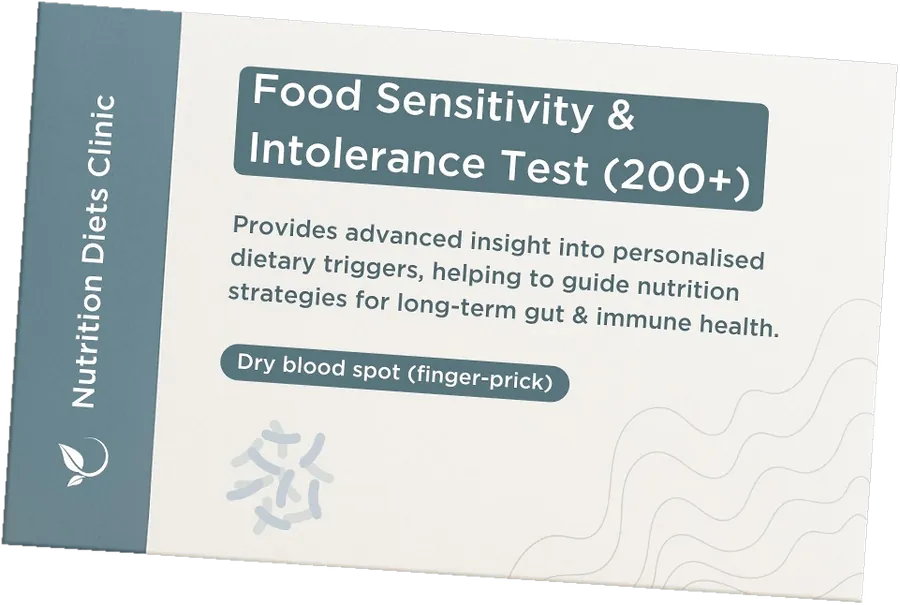
Food Sensitivity & Intolerance Test (200+)
Find out which of more than 200 foods and ingredients your immune system reacts to, and how strongly.
- Finger-prick blood
- Results in 7 working days
- Free UK delivery
Explore more food intolerance tests
All at-home tests →Not sure which test is right for you? Book a free Discovery Call
What do our clients say?
Common questions about food allergies and intolerances
What is the difference between a food allergy and a food intolerance?
A food allergy is an immediate immune reaction, usually involving IgE antibodies, that comes on within minutes to two hours and can be serious. A food intolerance is a reaction that does not involve that allergic response, such as lactose intolerance, where the body lacks an enzyme to digest a food. Food sensitivity is the broader term used for delayed reactions to food, which can appear hours or days later and are harder to trace.
What are the symptoms of a food intolerance?
The NHS says symptoms usually come on a few hours after eating the food, most often diarrhoea, bloating, wind and tummy pain, though headaches, tiredness, feeling sick, constipation, joint pain or rashes are possible too, and they can last for hours or days. That delay is what makes them hard to trace. A food allergy is different: it comes on quickly and can cause swelling, wheezing or itchy skin, and needs your GP or 999 (see the last question below).
Can a nutritionist help with food intolerances?
Yes, alongside your GP rather than instead of them. A registered nutritional therapist does not diagnose or treat medical conditions, food allergy included. What we do is look for what may be behind your reactions, whether bloating, headaches or skin flares, most often food sensitivities, histamine, the gut lining and how well you digest your food, and build a nutrition and lifestyle plan, with a supported elimination and reintroduction where it helps, so that your diet stays as varied as possible.
Do your tests check for food allergies?
No. Our food tests measure IgG, the antibodies linked to delayed reactions, not IgE, the antibodies behind food allergy. If you have reactions such as swelling of the lips or throat, wheezing or collapse after eating, that is an allergy and needs your GP or an allergy clinic, not a sensitivity test.
Are food intolerance tests accurate?
Not as a diagnosis. IgG food sensitivity tests are contested: the British Dietetic Association notes that IgG antibodies to food are found in healthy people, and the NHS does not recommend home tests that claim to diagnose intolerances. We use the result as a shortlist of foods to investigate, read against your symptoms and confirmed by removing and then reintroducing those foods. In practice, a long list of reactive foods often points to the gut lining rather than to the foods themselves.
How do you test for lactose intolerance?
Not with our tests. Lactose intolerance is not an immune reaction, so our food tests do not measure it, and we do not offer a separate lactose test. It is usually recognised from your symptoms and from cutting out and then reintroducing dairy, which we can guide you through. The Food Sensitivity & Intolerance Test (200+) does measure your immune response to the milk proteins, casein and whey, which is a different reaction.
What is histamine intolerance?
Histamine intolerance is when your body breaks down histamine, from food and from its own immune cells, more slowly than it builds up. It can bring on flushing, headaches, a blocked nose, hives or gut symptoms after histamine-rich food and drink such as wine, aged cheese and cured meat, and it often looks like an allergy even though allergy tests come back clear. We look at how much comes from your diet and how much from your gut, and the Histamine Intolerance Test reads the genes behind the enzymes that clear it.
How do you test for gluten intolerance?
Start with your GP, who can test you for coeliac disease. Coeliac disease is an autoimmune condition, not an intolerance, and the blood test only works while you are still eating gluten, so do not cut it out beforehand. If coeliac disease is ruled out, we can help you look at how wheat and gluten may be affecting you, with a supported elimination and reintroduction.
How much does a food intolerance test cost in the UK?
At Nutrition Diets Clinic the Food Sensitivity & Intolerance Test (200+) is £280, the vegetarian and vegan versions are £250, and the Histamine Intolerance Test is £300. All are at-home kits with free UK delivery and a prepaid return. Having the results explained is a separate, optional consultation.
Does the NHS recognise functional medicine?
Functional medicine is a private service rather than part of NHS care, so it works alongside your GP, not instead of them. When you choose a private practitioner, the NHS advises checking they are registered with an organisation accredited by the Professional Standards Authority (PSA). Carmen is registered with the Complementary and Natural Healthcare Council (CNHC), whose register the PSA accredits. We will always ask you to see your GP about symptoms that need medical assessment.
Is everything done online?
Yes. The Discovery Call and every consultation are by video, so you can work with an online food intolerance nutritionist from anywhere in the UK, and every test is a home collection kit.
When should I see my GP first?
If your lips, tongue or throat swell, you wheeze or struggle to breathe, or you collapse after eating, call 999: that is an allergic emergency. See your GP first if you have blood in your stools, weight loss you cannot explain, persistent vomiting, or a change in your bowels that lasts more than three weeks, and before cutting out gluten so you can be tested for coeliac disease. These need medical assessment, and we will always ask you to have it.
Still have questions? Ask Carmen on a free 15-minute video call.
Book a free Discovery Call