
Key Takeaways
“Leaky gut” means increased intestinal permeability. The gut lining becomes less selective and lets through particles it would normally keep out, which can drive inflammation beyond the gut itself.
It is usually a symptom of something else, not a standalone diagnosis. Diet, gut dysbiosis, chronic stress, infections and certain medications are the common drivers.
Symptoms are often non-digestive: fatigue, brain fog, skin problems and joint aches as well as bloating and irregular bowels.
Functional stool testing is the practical starting point. A comprehensive stool test such as the GI MAP Plus Zonulin (£455) assesses microbial balance, pathogens, inflammation and a gut-barrier marker in one sample.
Healing follows a sequence, not a single fix: remove the triggers, repair the lining, rebalance the microbiome, and restore through lifestyle.
Supplements help but do not lead. Food, sleep and stress regulation do the heavy lifting; targeted supplements are chosen for the individual.
A personalised, practitioner-led plan outperforms a generic protocol, because the right fix depends on what is actually driving the permeability.
Jump To
Still Bloated, Foggy or Reacting to Foods Despite a Clean Diet? Leaky Gut Explained
Leaky gut has become one of the most talked-about ideas in gut health, and for good reason. When the lining of your gut stops acting as a careful gatekeeper, the effects rarely stay in your digestive system. They can surface in your skin, your energy, your mood and how inflamed your body feels day to day.
It is also something standard blood tests are not designed to detect, which is why so many people are told everything looks “normal” while they still feel unwell. In functional medicine we treat a leaky gut as a signal to look deeper, at the diet, the microbiome, chronic stress and the hidden triggers driving it.
This guide explains what leaky gut actually is, the everyday habits and hidden triggers behind it, how at-home functional testing pinpoints what is going on, and the step-by-step, practitioner-led approach we use to calm the inflammation and help the gut lining repair.
In the UK, 37.6% of adults live with at least one disorder of gut–brain interaction. Gut problems are common, and they are frequently missed by standard testing.– Rome Foundation Global Epidemiology Study, Neurogastroenterology & Motility (2023)
What Is Leaky Gut Syndrome?
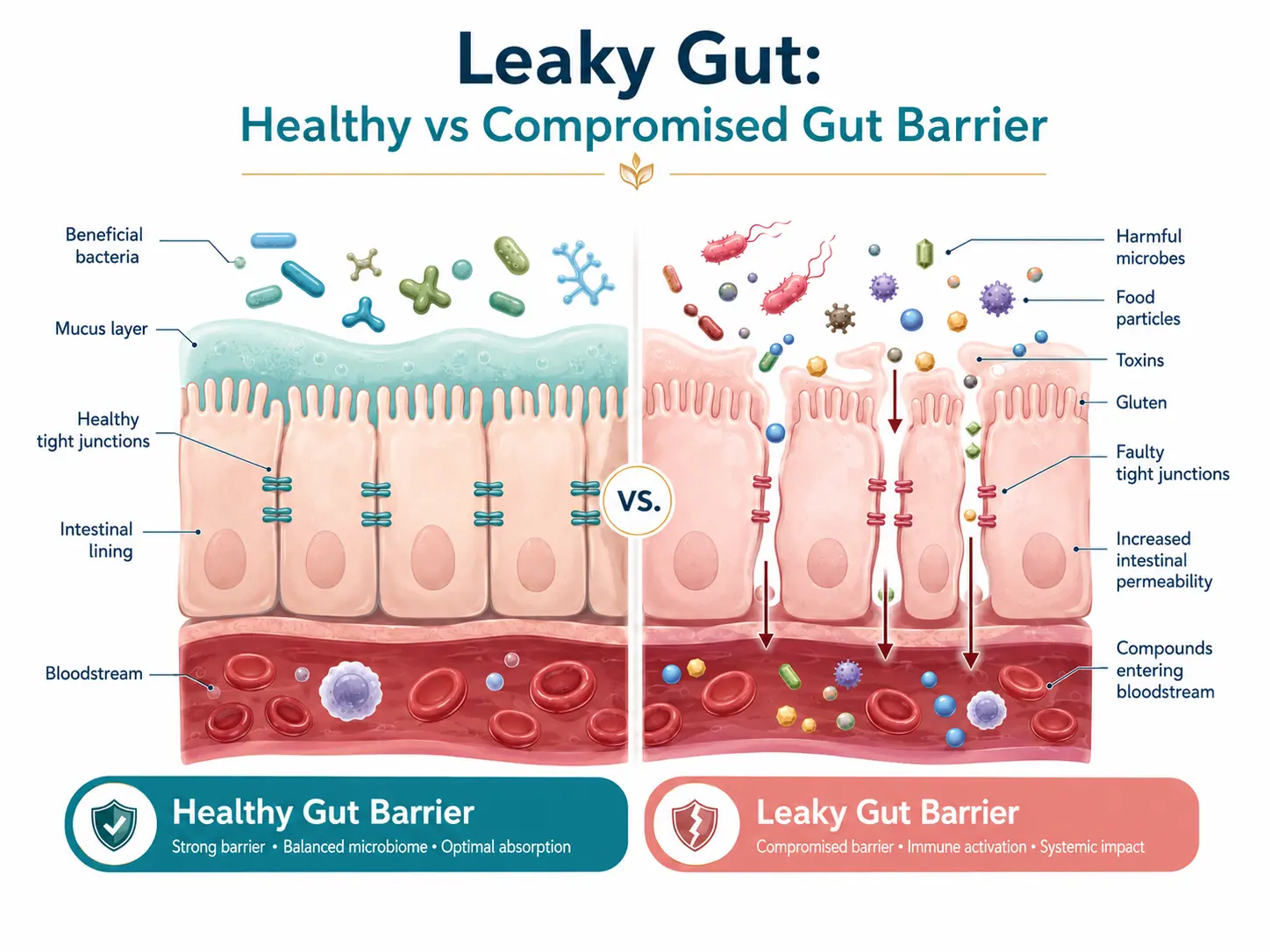
Leaky gut, or increased intestinal permeability, is the term for what happens when the lining of your intestinal wall becomes less selective, allowing undigested food particles, microbes and bacterial toxins to slip into the bloodstream that a healthy barrier would normally hold back.
Your gut lining is a single cell layer held together by tight junctions. Its job is to be selective: nutrients and water pass through, whilst everything else is screened out. When those junctions loosen, your immune system starts reacting to particles it was never meant to encounter, and the low-grade inflammation that follows is what connects a struggling gut lining to symptoms that go far beyond digestion. That is why leaky gut is approached as a whole-body gut health issue, not a purely digestive one.
What Are The Symptoms Of A Leaky Gut?
The symptoms of a leaky gut are frequently non-digestive, which is exactly why it is so often missed. In clinic, the people who turn out to have a compromised gut-barrier rarely come to us saying they think their gut is leaky. They tend to be exhausted, foggy, experiencing skin breakouts in their twenties or thirties, or bloated by mid-afternoon. In many cases, these individuals have already used standard blood tests or mainstream consumer tests and the results have failed to shed light on why those symptoms are present.
Common signs of a leaky gut include:
- Bloating, wind or unpredictable bowel habits
- Food reactions that seem to come and go
- Persistent fatigue that sleep does not fix
- Brain fog or poor concentration
- Skin problems, acne, eczema, rosacea
- Joint aches or generalised inflammation
- Frequent colds or a reactive immune system
These are the symptoms you notice day to day. What makes a leaky gut matter is where that inflammation travels next.
How Leaky Gut Affects Your Skin, Brain and Immune System
Because a leaky gut allows inflammation and immune activity to spread beyond the digestive tract, increased intestinal permeability is now linked to a wide range of conditions that can seem to have nothing to do with the gut. Three of the clearest connections are with the skin, the brain and the immune system.
Leaky Gut and Skin Conditions
The gut–skin axis is one of the most well-documented of these connections. When the intestinal barrier is inflamed and the gut microbiome is out of balance, that inflammation and immune signalling can surface in the skin as acne, eczema, rosacea, psoriasis and other forms of dermatitis. It is why persistent skin problems that do not respond to topical creams and treatments so often trace back to what is happening in the gut. In clinic, we frequently find that calming gut inflammation and rebuilding a healthy microbiome is the missing piece for skin conditions that have not settled with anything else, and that treating the skin from the inside out gives more lasting results than managing symptoms on the surface.
Leaky Gut, Brain Fog and Mood
Through the gut–brain axis, the two-way signalling line between the digestive system and the brain, the same inflammation can influence how you think and feel. A large share of the body’s serotonin is produced in the gut, so when the lining is compromised and inflammation is circulating, many people experience brain fog, poor concentration, low mood, anxiety and fatigue. It is one of the reasons gut health is increasingly recognised as central to mental as well as physical wellbeing, and why patients often notice their mental clarity and energy lift once the gut is calmer and the barrier is repaired.
Leaky Gut, Inflammation and Autoimmune Conditions
Around 70% of the immune system sits in and around the gut lining, so when the barrier becomes leaky it keeps the immune system on constant alert. As undigested food particles and bacterial toxins pass into the bloodstream, the immune system mounts a response, and the resulting low-grade, systemic inflammation is associated with joint aches, persistent fatigue and a more reactive immune response. Increased intestinal permeability is also an active and growing area of research in autoimmune conditions, where the immune system begins to target the body’s own tissues. Research into zonulin, the protein that regulates the tight junctions of the gut barrier, has linked raised permeability to conditions such as coeliac disease and type 1 diabetes, which is why supporting gut barrier integrity is a core part of the functional medicine approach to inflammation and autoimmunity.

How Does The Gut Barrier Break Down In A Leaky Gut?
A leaky gut does not simply wear through: the barrier is actively regulated. The cells of the intestinal lining are stitched together by tight junctions, protein complexes (mainly occludin and claudins) whose opening is governed by a signalling protein called zonulin. When zonulin is released in excess, those junctions loosen and the wall becomes more permeable.
Above the cells sits a protective mucus layer and a community of beneficial bacteria that ferment fibre into short-chain fatty acids such as butyrate, the gut wall’s main fuel. When the microbiome loses diversity, butyrate falls and the mucus thins, the barrier cells are left underfed and the junctions give way. Molecules that should have stayed in the gut then leak into the bloodstream, chief among them bacterial fragments called lipopolysaccharides (LPS); it is this endotoxin exposure, known as metabolic endotoxemia, that fuels the low-grade inflammation behind many leaky gut symptoms.
The same lining also releases hormones that regulate hunger, fullness and digestive juices, so a failing barrier can unsettle appetite, nutrient absorption and immune regulation at once. In clinic, a leaky gut is rarely where the story starts; it is usually downstream of something else, which is why lasting improvement comes from finding that trigger rather than chasing the permeability itself. Those triggers are what we turn to next.

What Causes A Leaky Gut?
A leaky gut is almost always the result of several factors compounding over time rather than a single cause. The most common drivers are a processed, high-sugar diet, an imbalanced gut microbiome, chronic stress, and certain medications and toxins, all tied together by the same common thread: gut inflammation.
A Processed, High-Sugar Diet
A diet high in ultra-processed foods, refined sugar and industrial fats promotes inflammation and erodes the gut lining, and additives such as emulsifiers can strip the protective mucus layer that shields it. Unidentified food intolerances compound the problem: many people eat trigger foods daily without realising they are driving an immune response.
Gut Dysbiosis (an Imbalanced Microbiome)
An imbalanced gut microbiome weakens the lining’s defences. When protective bacteria are outnumbered, inflammation rises and the barrier becomes more permeable, which is why rebalancing the microbiome is central to healing leaky gut.
Chronic Stress and the Gut-Brain Axis
Prolonged stress disrupts the gut–brain axis and alters gut flora. Stress hormones such as cortisol promote inflammation and weaken the lining directly, one reason two people on identical diets can have very different gut resilience.
Medications, Alcohol and Environmental Toxins
Regular NSAIDs (ibuprofen and similar), repeated antibiotic courses, acid-blocking PPIs and frequent alcohol all disturb the microbiome or irritate the lining, and can increase permeability. Environmental toxins add oxidative stress that further taxes the barrier.
Each of these causes leaves traceable signs, which is exactly what functional testing is designed to uncover.

How To Test For Leaky Gut
The most effective way to assess a leaky gut is to test what drives it, the microbiome, inflammation, infections and food triggers, and read those results against your symptoms and history. Comprehensive functional medicine stool testing captures most of that in a single at-home sample, which is why it’s usually the best starting point.
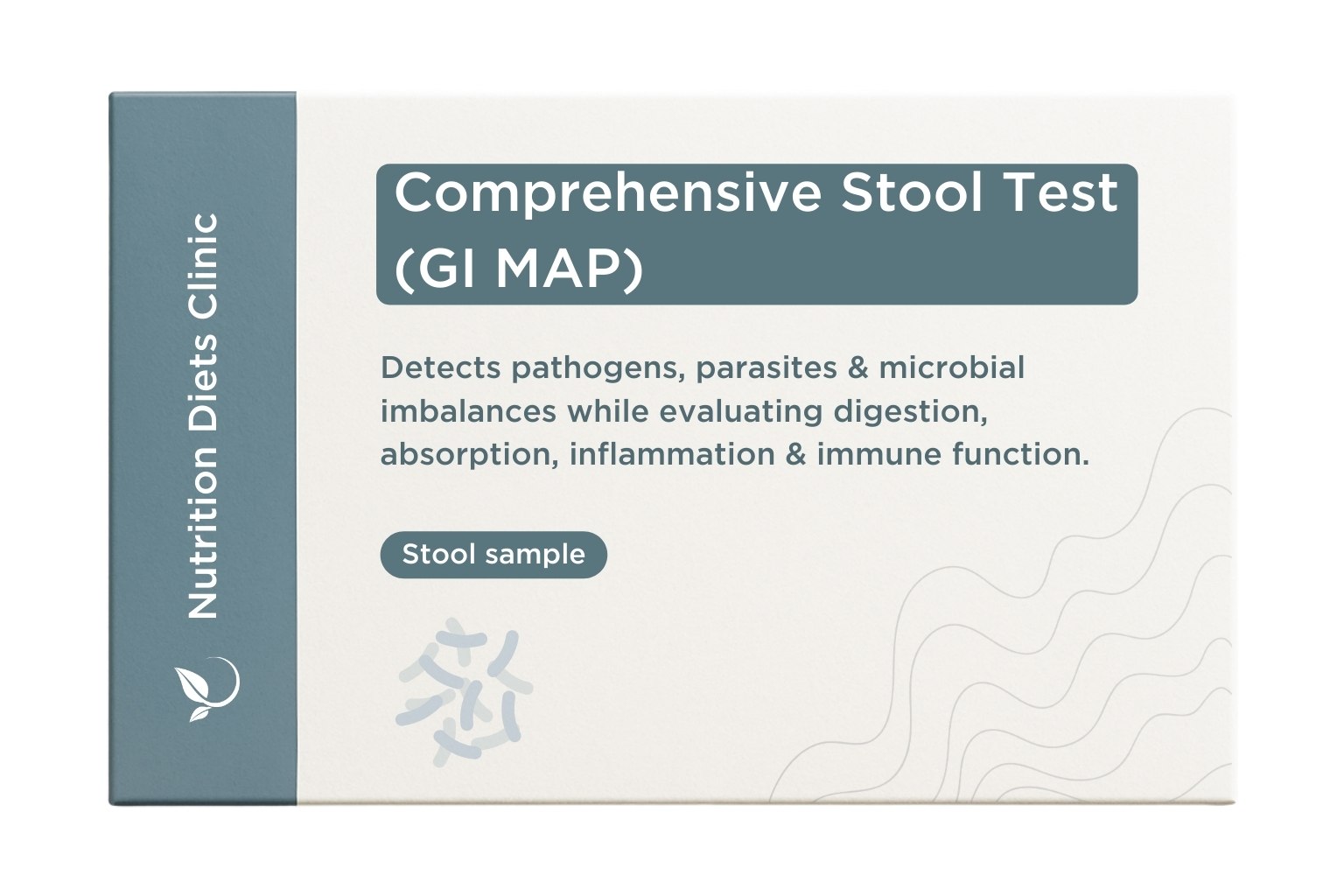
The Comprehensive Stool Test (GI MAP) Plus Zonulin is the most comprehensive option: a full microbiome, pathogen and inflammation panel plus a zonulin marker linked to intestinal permeability. Because no single marker tells the whole story on its own, a practitioner reads zonulin alongside the rest of your results and your symptoms, which is exactly what makes a guided, comprehensive test more useful than any one-number verdict.
| Test | Price | Best for |
|---|---|---|
| Comprehensive Stool Test (GI MAP) | £390 | A strong starting point for most gut concerns: maps the microbiome, hidden pathogens (bacteria, parasites, yeast) and inflammation from a single at-home sample. |
| Comprehensive Stool Test (GI MAP) Plus Zonulin | £455 | For those who suspect leaky gut, this is the most advanced gut health test available. It includes everything the GI MAP covers (microbiome, pathogens, inflammation) plus a zonulin marker associated with intestinal permeability for the most complete view of your gut health. |
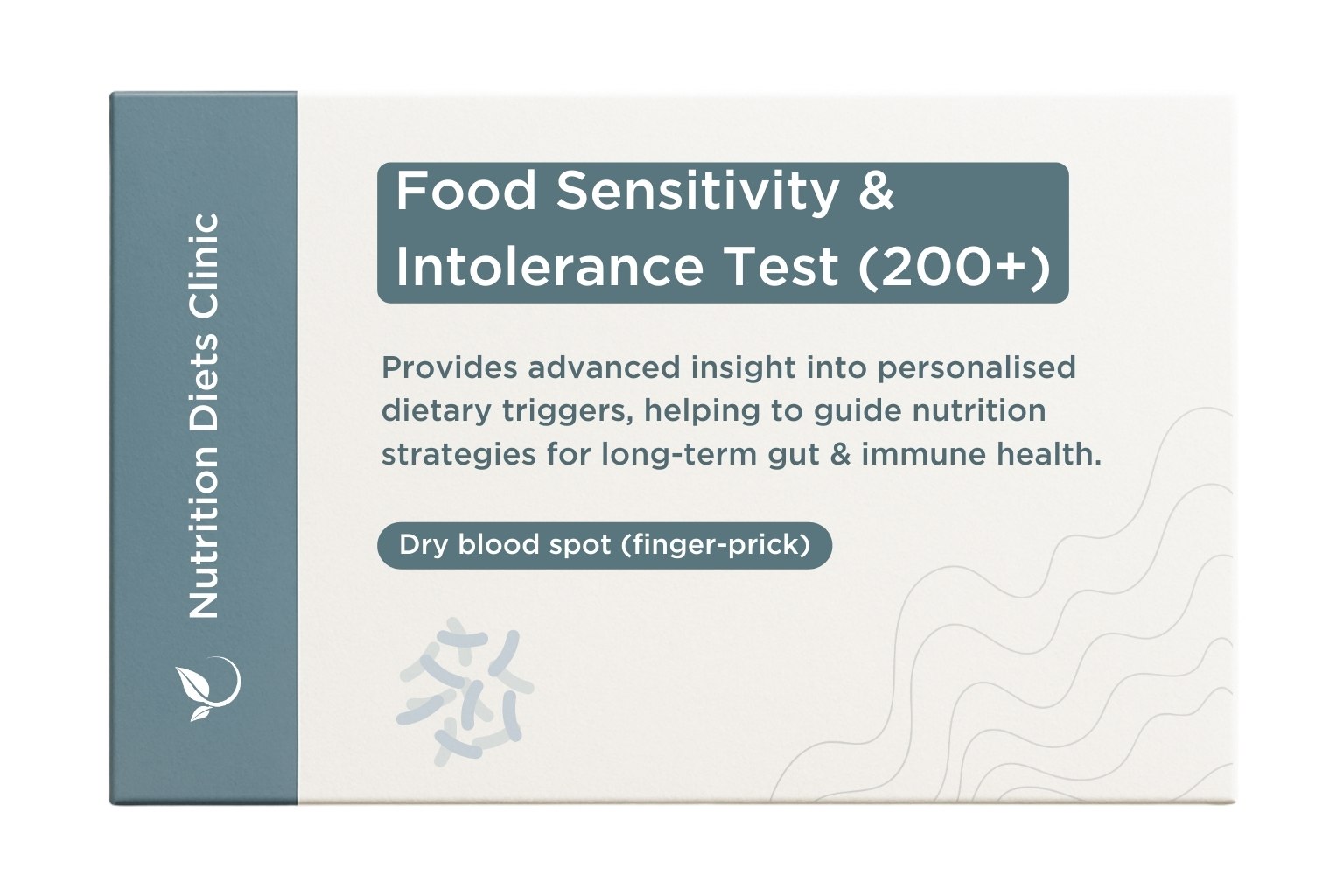
| Food Sensitivity & Intolerance Test (200+) | £280 | Best if you suspect specific foods are driving your symptoms. Screens your response across 200+ foods; vegetarian and vegan panels available. |
| SIBO Breath Test (Lactulose) | £210 | Bloating, wind and IBS-type symptoms, often worse after meals, that point to small-intestinal bacterial overgrowth (SIBO). |
| Helicobacter pylori (H. pylori) Stool Test | £180 | Reflux, heartburn, nausea or upper-abdominal discomfort that could point to an H. pylori infection. |
| Prices include the kit, lab processing and return shipping. Samples are processed by leading accredited labs we partner with. | ||
Test. Don’t Guess.
Get the answers you are looking for with our range of clinical-grade at-home tests.
Easy to order. Easy to use.

How Does Functional Medicine Heal A Leaky Gut?
Functional medicine heals a leaky gut by working through a sequence rather than reaching for a single supplement: identify and remove what is driving the damage, then actively support the lining to repair. In clinic, this is where the difference between a generic gut protocol off the internet and a personalised plan really shows: the order and emphasis change completely depending on whether the root cause is a food trigger, an overgrowth, stress, or all three at once.
- Assess the root cause. Map symptoms, history and diet, then use functional testing to see what is actually happening in the gut: microbes, inflammation, barrier integrity and food triggers.
- Remove the triggers. Take out the inflammatory foods and identified intolerances, and where relevant address infections or overgrowth (such as SIBO or H. pylori).
- Repair the lining. Support the gut barrier with a nutrient-dense, anti-inflammatory diet and, where appropriate, targeted nutrients such as L-glutamine, zinc, quercetin and collagen.
- Rebalance the microbiome. Reintroduce diversity with prebiotic and probiotic-rich foods, and targeted probiotics where indicated, to crowd out problem bacteria and lower inflammation.
- Restore through lifestyle. Sleep, stress regulation, movement and hydration are not optional extras: chronic stress alone can keep a gut lining inflamed no matter how clean the diet.
Personalised Nutrition for Leaky Gut Repair
There is no single leaky gut diet that works for everyone, so we build your plan around your test results and your symptoms rather than a generic template. An in-depth assessment of what you eat pinpoints the problem areas, a hidden trigger food, a nutrient gap, too little fibre, and the foundations to build on: anti-inflammatory foods, diverse plant fibres that feed a healthy microbiome, and the nutrients the gut lining needs to repair. Where it helps, we use a structured elimination and reintroduction approach so we can see exactly which foods calm your gut and which inflame it.
Managing Stress to Heal a Leaky Gut
Because stress travels straight down the gut–brain axis, no amount of dietary change will fully heal a gut that is kept inflamed by a nervous system stuck in fight-or-flight. Chronically raised cortisol thins the protective mucus layer and loosens the tight junctions of the gut wall, which is why stress is so often the missing piece when a “perfect” diet still isn’t working. This is where our approach differs from most clinics: alongside nutrition, we integrate Neuro-Linguistic Programming (NLP) and lifestyle coaching to calm the nervous system and work through the stressors keeping the gut inflamed, not just the food on the plate.
Ready to start healing your gut?
On a free Discovery Call, our practitioner will help you map out a personalised plan around your symptoms and results, so you invest in real answers, not guesswork.
Frequently Asked Questions About Leaky Gut
Is leaky gut a real medical condition?
Increased intestinal permeability is real, measurable and well documented in research. “Leaky gut syndrome” as a standalone diagnosis is more debated. It is best understood as a mechanism that contributes to other conditions rather than a disease in its own right. That is why a functional medicine approach treats the causes, not just the label.
What are the main symptoms of a leaky gut?
Symptoms are often non-digestive: persistent fatigue, brain fog, skin problems such as acne or eczema, joint aches and a reactive immune system, alongside bloating, wind and irregular bowel habits. Because these overlap with many other conditions, testing is the reliable way to get answers.
How do you test for a leaky gut?
The most reliable way to test for a leaky gut is a comprehensive stool test that assesses the microbiome, inflammation and a gut-barrier marker, such as the GI MAP Plus Zonulin (£455), interpreted alongside your symptoms and history. Food sensitivity testing is often added to identify trigger foods.
How long does it take to heal a leaky gut?
Many people notice improvement within a few weeks of removing key triggers, with the gut lining continuing to repair over a few months, though the exact timeline varies with the cause and how long it has been present. A personalised plan, guided by testing, is faster and more effective than trial and error.
Can you heal a leaky gut with diet alone?
Diet is the foundation and for some people it is enough. But when an infection, overgrowth, significant dysbiosis or chronic stress is involved, diet alone often plateaus, which is when testing and a structured plan make the difference.
Which supplements help repair the gut lining?
Nutrients commonly used to support the gut lining include L-glutamine, zinc, quercetin and collagen, with probiotics to support the microbiome. Supplements work best chosen for the individual based on symptoms and test findings, rather than taken as a generic stack.
Does stress really cause a leaky gut?
Yes, chronic stress is a genuine driver. Stress hormones promote inflammation and disrupt the gut–brain axis and gut flora, which can weaken the lining directly. This is why stress regulation is part of healing, not an afterthought.
Should I see a practitioner or just try a leaky gut protocol myself?
If symptoms are mild and clearly diet-related, sensible diet changes are a reasonable first step. If they are persistent, non-digestive, or have not improved despite a clean diet, a practitioner-led assessment helps identify what is actually driving the permeability so you are not guessing.
YOUR HEALTH. YOUR CHOICE.
Healing a leaky gut is rarely about a single supplement. It is about finding what is driving the inflammation in your gut and addressing it in the right order. Because intestinal permeability is so closely tied to your wider health, acting early can stop small problems becoming chronic ones.
At Nutrition Diets Clinic, we identify and correct the imbalances behind your symptoms using the functional medicine approach: expert one-to-one therapy, personalised nutrition and lifestyle plans, and easy, at-home functional testing. No pressure. Getting started is simple and free.